You've invited people who don't all know each other, and now it's that awkward 10pm silence — nobody knows what to say. The fix: an icebreaker game, launched in 2 minutes, with nothing to pull out of your bag. These 8 no-prep games break the ice from round one, whether you're 4 or 12 hanging around drinks. No need to be a pro host: you explain the rule in one sentence, and the group does the rest.
- Why launch an icebreaker game at the start?
- 8 icebreaker games for parties (zero materials)
- The unwritten rules to make it actually work
- Which game for your group?
- What to do after the first round
- Games recap table
- FAQ
- Your turn to play
Why launch an icebreaker game at the start of the night ?
We've all been there: people arrive, shake hands, stare at their drinks, and the conversation revolves around the weather or the commute. It's not that they're not nice — it's just that talking about yourself to strangers without a framework is uncomfortable for basically everyone. And yeah, even the most outgoing people feel it.
An icebreaker game changes that in seconds. Why? Because it creates a structured framework: suddenly, talking about yourself isn't weird, it's the rule of the game. Everyone's in the same boat, everyone has to answer, and suddenly everyone loosens up a bit. The game gives you an excuse to tell a story, reveal a preference, or bluff about your past — and these little moments create shared memories almost instantly.
"The first 10 minutes of a night with strangers are the hardest. A good icebreaker turns them into 10 minutes of laughs. And after that, nobody's looking at their phone."
Another benefit, often underestimated: a game balances group dynamics. Without an activity, the outgoing people monopolise the conversation and the shy ones hang back. With a circle game, everyone speaks in turn — even the quietest end up sharing something, and often they've got the best story.
Finally, a solid icebreaker sets the tone for the whole night. If you launch a fun, inclusive game from the start, the group gets that this is a relaxed night where you can have a laugh without overthinking it. It's the best 10-minute investment you can make for your party.
8 icebreaker games for parties (zero materials) ?
All these games have one thing in common: zero materials, zero prep, zero excuses not to launch them. You can run them at happy hour, on a terrace, at a camping trip, or in a living room. All you need is a group and a voice to explain the rules.
1. Two Truths, One Lie
How it works: Each player says three statements about themselves — two true, one false — and the group guesses which one's the lie.
- Best for: 4 to 15 people
- Duration: 15-25 min
- Intensity level: Light to Medium
- Why it works: The bluffing forces people to be creative and reveals unexpected things about each other. You find out the quietest person did skydiving, and suddenly the real conversations start.
- Pro tip: Encourage people to pick surprising truths — the game's way more fun when the lie is believable.
2. Would You Rather?
How it works: One player asks "Would you rather A or B?" — everyone else answers and explains their choice.
- Best for: 2 to 20 people (yeah, even one-on-one works)
- Duration: 10-30 min (depending on mood)
- Intensity level: Light to Medium
- Why it works: "Would you rather" questions reveal personality without people realising it. "Would you rather always be late or always be early?" — and suddenly real conversations kick off.
- Pro tip: Start with light questions (food, holidays, superpowers) before moving to tougher choices.
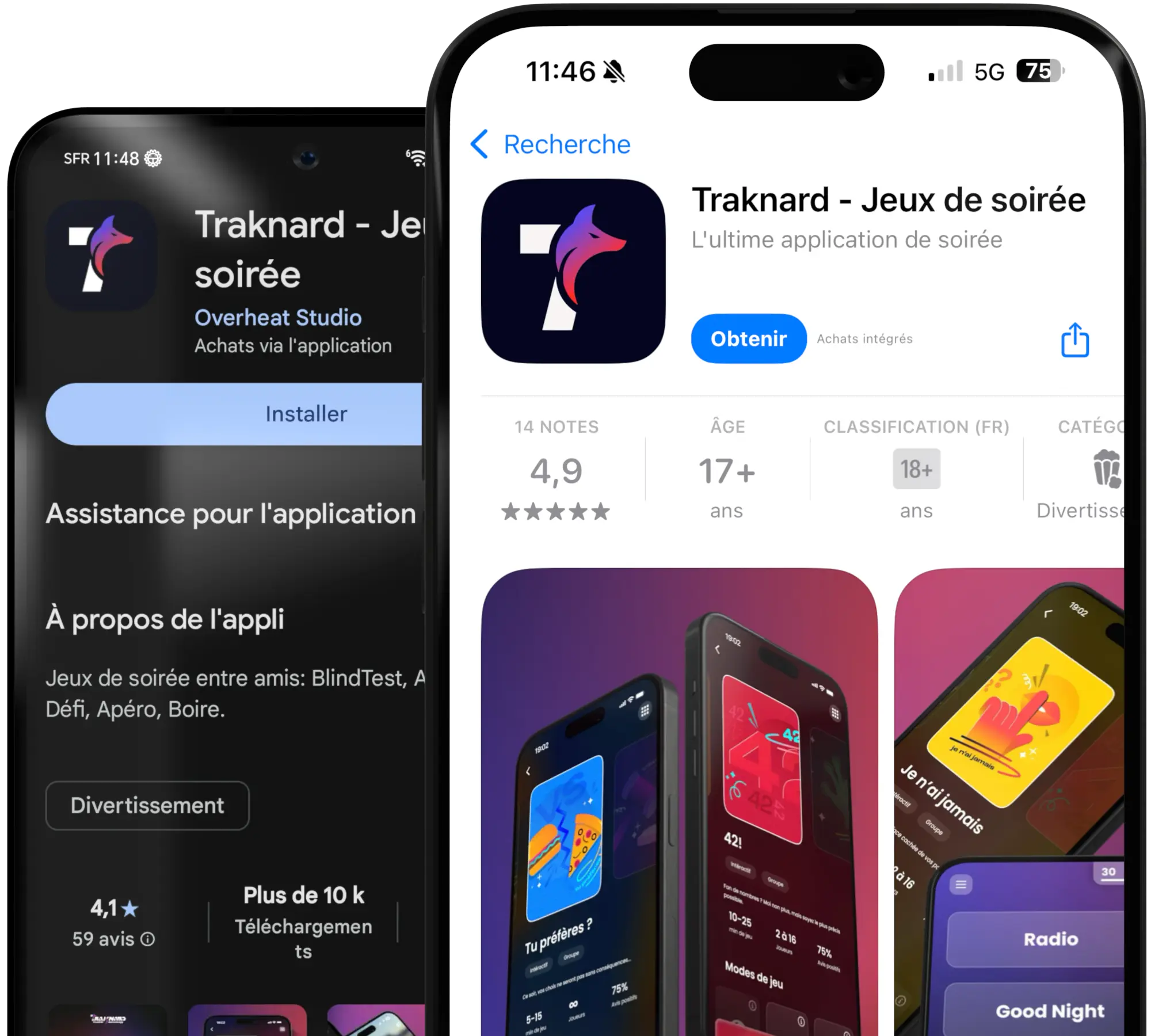
Would You Rather is also built into the Traknard app — with hundreds of questions sorted by theme and intensity level, so you never run out of ideas.
3. Chinese Portrait
How it works: "If you were a film / a city / a dish / an animal… what would you be?" Everyone answers and explains why.
- Best for: 4 to 12 people
- Duration: 10-20 min
- Intensity level: Light
- Why it works: Metaphors sometimes say more about someone than direct questions. And it gets hilarious when someone compares themselves to a completely unexpected animal.
- Pro tip: Mix up the categories — a film, a season, an emoji, a historical era. The weirder, the funnier.
4. Who Am I? (Spoken Version)
How it works: One player thinks of a real or fictional person, others ask yes/no questions to figure out who it is.
- Best for: 4 to 12 people
- Duration: 15-25 min
- Intensity level: Light
- Why it works: The game creates natural camaraderie — everyone's working together to guess, and that builds connection fast.
- Pro tip: Set a question limit (20 max) to keep the pace up.
5. Never Have I Ever
How it works: One player says "Never have I ever [done something]" — anyone who's done it raises their hand (or takes a sip if you're playing with drinks).
- Best for: 4 to 20 people
- Duration: 15-30 min
- Intensity level: Medium to Personal
- Why it works: You discover wild stuff about people in 5 minutes. "Never have I ever slept in an airport" — and suddenly three hands go up and each person's got a story.
- Pro tip: This game works great without alcohol too — just raise your hand, put down a token, or shout "me!" out loud. The stories are what matter.
"Never Have I Ever is the game that turns strangers into mates in under 20 minutes. Because a raised hand always calls for a story."
6. Rapid-Fire Questions in a Circle
How it works: One player asks the person to their left a question, they answer in 10 seconds max, then ask the next person — and so on.
- Best for: 4 to 15 people
- Duration: 10-15 min
- Intensity level: Light
- Why it works: The fast pace stops people overthinking — answers are spontaneous and often hilarious. And everyone talks, even the quietest ones.
- Pro tip: Have 3-4 questions ready to kick things off, the rest will flow naturally.
7. Common Ground
How it works: In pairs (or as a whole group), find as many things you have in common in 3 minutes. Then each pair shares their discoveries.
- Best for: 4 to 16 people (in pairs)
- Duration: 10-15 min
- Intensity level: Light
- Why it works: Finding unexpected common ground with someone you just met feels instantly good. And it gives you conversation topics for the rest of the night.
- Pro tip: Mix up people who don't know each other into pairs — that's the whole point!
8. Speed Interview
How it works: In pairs, each person interviews the other for 2 minutes (any questions), then introduces their partner to the group.
- Best for: 4 to 20 people
- Duration: 15-20 min
- Intensity level: Medium
- Why it works: Being introduced by someone you just met is both funny and touching — and it forces you to actually listen to someone for 2 minutes, which is rare.
- Pro tip: Give some starter questions: "Ask them about their favourite place in the world, their hidden talent, and what they'd do with a day with no obligations."
The unwritten rules to make it actually work ✅
A solid icebreaker isn't just about picking the right game — it's about knowing how to launch it and keep it going. Here are the unwritten rules that the best party hosts follow without even thinking about it.
- Start light, build gradually. Don't launch "Never Have I Ever" as your first game if people just arrived. Start with Chinese Portrait or Rapid-Fire Questions, then turn up the heat once everyone's comfortable.
- Never force participation. If someone passes their turn or says "I'm good listening for now," that's fine. Forcing someone to speak is the fastest way to shut them down for the whole night. The game should be an invitation, not a requirement.
- You go first. If you're launching the game, be the first to play — and be honest, a bit vulnerable, a bit funny. That sets the tone and shows everyone it's safe to let loose.
- Pace it right. If a question sparks a great conversation, let it breathe for 2-3 minutes before moving on. The game is a spark, not the whole fire.
- Avoid questions that sting. "What's your biggest shame?" or "What's your worst memory?" — nope. The icebreaker should create lightness, not discomfort. Stick to fun territory: travel, tastes, funny stories, dreams.
- Keep a backup game ready. If the first game falls flat (it happens), having a second option in your back pocket lets you pivot without losing momentum.
The best icebreaker is the one you launch with confidence. Even a basic game becomes fun if you pitch it with energy and don't overthink it.
Which game for your group? ?
Not all groups are the same — and the perfect game for 6 mates who are already warmed up isn't the same as for 12 colleagues meeting outside the office for the first time. Here's a quick selection guide.
For a small group (4-6 people)
- Two Truths, One Lie: ideal, everyone gets involved and the group's small enough that each reveal sticks.
- Speed Interview: perfect for building strong connections fast in a tight group.
- Common Ground: works really well in pairs when the group is small.
For a big group (8+ people)
- Would You Rather: works at any size, group votes create instant energy.
- Never Have I Ever: hands going up at the same time creates an immediate group effect, even with 15 people.
- Rapid-Fire Questions in a Circle: the circle format adapts to any size.
For a shy group
- Chinese Portrait: metaphors let people talk about themselves indirectly — less intimidating than direct questions.
- Common Ground: the pair format is less exposed than speaking to the whole group.
- Who Am I?: everyone collaborates, no individual pressure.
For a group that's already warmed up
- Never Have I Ever: naturally builds in intensity and reveals unexpected stuff.
- Two Truths, One Lie: the bluffs get more creative as rounds go on.
- Would You Rather (hard mode): tricky questions spark debate and laughter at the same time.
For a short happy hour
Go for quick, punchy games: Rapid-Fire Questions in a Circle or Chinese Portrait — 10-15 minutes max, everyone leaves smiling with a few conversation starters.
For a longer night
Launch a light icebreaker early, then move to heavier games. Natural flow: Chinese Portrait → Would You Rather → Never Have I Ever → then hand it over to Traknard for what's next ?
Games recap table ?
| Game | Players | Duration | Intensity | Best for |
|---|---|---|---|---|
| Two Truths, One Lie | 4-15 | 15-25 min | Light → Medium | Any group, universal safe bet |
| Would You Rather? | 2-20 | 10-30 min | Light → Personal | Big group, long night, gradual intensity build |
| Chinese Portrait | 4-12 | 10-20 min | Light | Shy group, start of night, happy hour |
| Who Am I? (Spoken) | 4-12 | 15-25 min | Light | Mixed group, collaborative game, no individual pressure |
| Never Have I Ever | 4-20 | 15-30 min | Medium → Personal | Warmed-up group, happy hour or drinking games (softs OK) |
| Rapid-Fire Questions in Circle | 4-15 | 10-15 min | Light | Fast pace, dynamic group, quick start |
| Common Ground | 4-16 | 10-15 min | Light | Shy group, pair format, short night |
| Speed Interview | 4-20 | 15-20 min | Medium | Small group, build strong bonds, longer night |
What to do after the first round ?
The ice is broken, people are smiling, first conversations have kicked off — now what? This is where a lot of nights dip if nobody takes the lead. Here's how to transition smoothly.
- Step up the energy with a more dynamic game. If you started with Chinese Portrait, move to "Would You Rather" with spicier questions, or launch "Never Have I Ever" to uncover wilder stories. Think natural progression — not a sudden jump.
- Let conversations flow naturally. If after the first game, people break into smaller chats and hit it off, that's the best sign. Don't try to control everything — the game did its job.
- Keep a backup game in your pocket. If energy dips 30-40 minutes later (it happens), having a second game ready lets you reignite things effortlessly. This is where Traknard becomes your secret weapon: dozens of mini-games sorted by vibe, duration and intensity, two taps away.
- Transition to drinking games (with non-alcoholic options for everyone). Once the group's loose, games like Truth or Dare or Never Have I Ever in the Traknard app naturally take over. And for people who don't drink or prefer softs, the game works exactly the same — it's the vibe that counts, not what's in the glass.
- Explore Traknard's card games. The cards section of the app has formats like River or Pyramid that work brilliantly once the group's confident — perfect for a second half of the night that's more festive.
And if you want to push the fun even further, check out Traknard's interactions — mini-challenges and dares that get the group moving and create unforgettable moments. Between Killer Stare, Poker Face, or Timer, you've got enough to keep things going all night.
FAQ — Icebreaker Games for Parties ❓
What's the best icebreaker game for a party?
Answer: The two absolute safest bets are Two Truths, One Lie and Would You Rather. Why? Zero rules to explain (30 seconds max), works from 4 to 20 people, and naturally builds in intensity over rounds. "Two Truths, One Lie" reveals unexpected stuff about everyone, while "Would You Rather" sparks debates that get real conversations rolling. If you're unsure, start with one of these two — you can't go wrong.
How do adults get to know each other quickly?
Answer: Short rapid-fire questions in a circle and speed interviews are especially effective with adults. They create a structured frame that gives a natural excuse to talk about yourself — which is often hard to do spontaneously after your 20s. Speed Interview is particularly powerful: being introduced by someone you just met is both funny and touching, and it creates instant connection between the pair.
What games work for friends who don't know each other?
Answer: Go for bluff and story games — Two Truths, One Lie and Never Have I Ever — rather than competitive or performance-based games. When people don't know each other, games where you have to "win" can put newcomers on edge and create awkward dynamics. Discovery games level the playing field: nobody's better or worse, you're just getting to know each other.
How do you break the ice without alcohol?
Answer: Good news: all 8 games here work 100% without booze. The game creates the vibe, not the drink. For "Never Have I Ever," you raise your hand instead of taking a sip — same effect. For "Would You Rather," softs and mocktails work perfectly. What matters is the frame and group energy, not what's in the glasses. Traknard's built for this: fun for everyone, whether you're drinking or not.
What's the minimum number of players for an icebreaker game?
Answer: Most games here really shine with 4 players minimum, but some work with fewer. "Would You Rather" works even one-on-one — great for breaking the ice on a first date or two-person meeting. "Common Ground" and "Speed Interview" work well at 3-4. For "Never Have I Ever" and "Rapid-Fire Questions in a Circle," 4-5 minimum so the format really lands.
What's the difference between an icebreaker and a regular party game?
Answer: An icebreaker is short (5-15 min), focused on getting to know each other, and played early when people don't know each other yet. Its job is to create that first connection, not entertain for hours. A regular party game — like those in Traknard (Truth or Dare, The Tribunal, Blind Test) — takes over once the group's loose, with longer formats, more intensity, and more festive energy. One preps the ground, the other builds on it.
How do you host a party when people don't know each other?
Answer: Three-step recipe: 1) Launch a light icebreaker in the first 10 minutes (Chinese Portrait or Rapid-Fire Questions). 2) Move to something more dynamic once everyone's settled (Would You Rather, Never Have I Ever). 3) Let conversations happen naturally — and keep a backup game ready if energy dips. Traknard's perfect for step three: dozens of games sorted by vibe and intensity, two taps away.
Can you play these games outdoors (terrace, camping)?
Answer: Absolutely — and that's one of the big perks of these 8 games. Zero materials = zero location limits. Terrace, camping, garden, bar, beach, van on a road trip… you can launch "Two Truths, One Lie" anywhere, anytime, in 30 seconds. Only requirement: a group and a voice to explain the rules.
Your turn to play ?
Quick recap:
To break the ice fast:
→ Launch Two Truths, One Lie or Would You Rather — 30 seconds to explain, 20 minutes of laughs guaranteed.
For a shy group:
→ Start with Chinese Portrait or Common Ground — indirect formats that put everyone at ease with no pressure.
For a big group:
→ Never Have I Ever or Rapid-Fire Questions in a Circle — formats that create group energy even with 15 people.
To keep things going after the icebreaker:
→ Open Traknard — Truth or Dare, Never Have I Ever, The Tribunal, or card games like River or Pyramid for a second half of the night people won't forget.
To play anywhere, with zero prep:
→ These 8 games are 100% no-materials. Terrace, camping, living room, bar — zero excuses not to kick off a round.
The real question isn't "how do I break the ice?" It's "why did I wait this long to launch the first game?" ?
Traknard is for 18+. For drinking games, drink responsibly — and always have non-alcoholic options for those who prefer.