You've got a group of mates who don't know each other yet, an integration night that's starting slow, or a pre-drinks with new faces — and awkward silence is setting in. These 10 icebreaker games launch in 30 seconds flat, need zero materials, and turn a bunch of near-strangers into a laughing crew. No rules to read, no gear to prep: just games that naturally build connection from minute one. We'll also give you the unwritten rules to keep things fun without making anyone uncomfortable.
- Why an icebreaker changes everything at the start of a night
- 10 icebreaker games to pull out tonight
- The unwritten rules to keep it fun
- How to chain games together to keep the vibe going all night
- Which game to pick based on your group
- Your turn to play 🎉
Why an icebreaker changes everything at the start of a night
The first few minutes of a night with strangers are usually the most awkward. Everyone's standing around with a drink, staring at the ceiling or their phone. Nobody wants to make the first move because nobody knows yet what'll land or what'll kill the vibe. And that's exactly where a solid icebreaker makes all the difference.
One short game — even just five minutes — is enough to break the "polite group of strangers" dynamic. Why? Because it gives everyone a legit reason to talk, react, and laugh. No need to hunt for conversation topics: the game does it for you. And once someone's dropped something funny or unexpected about themselves, the ice is genuinely broken.
There's another underrated advantage: a well-chosen icebreaker levels the playing field. The shy person who'd never normally speak up ends up answering "would you rather travel to the past or the future?" right alongside everyone else. No pressure, no judgment — just a question that makes you want to answer. That's the magic of a good party game: it creates equality and connection without anyone realizing it.
And no, this isn't like those corporate icebreakers at work where you mime your favourite animal in front of suited-up colleagues. We're talking about games designed for nights out, pre-drinks, hangouts — stuff that makes you want to play, not run for the hills.
10 icebreaker games to pull out tonight 🎯
Here's your go-to list. Each game comes with the concept in one sentence, minimum players, and the best time to bust it out. From super chill to pretty revealing — pick based on the vibe.
1. Would You Rather?
Concept: One player asks a "would you rather A or B?" question and everyone answers at the same time, then explains their choice.
- Min. players: 3
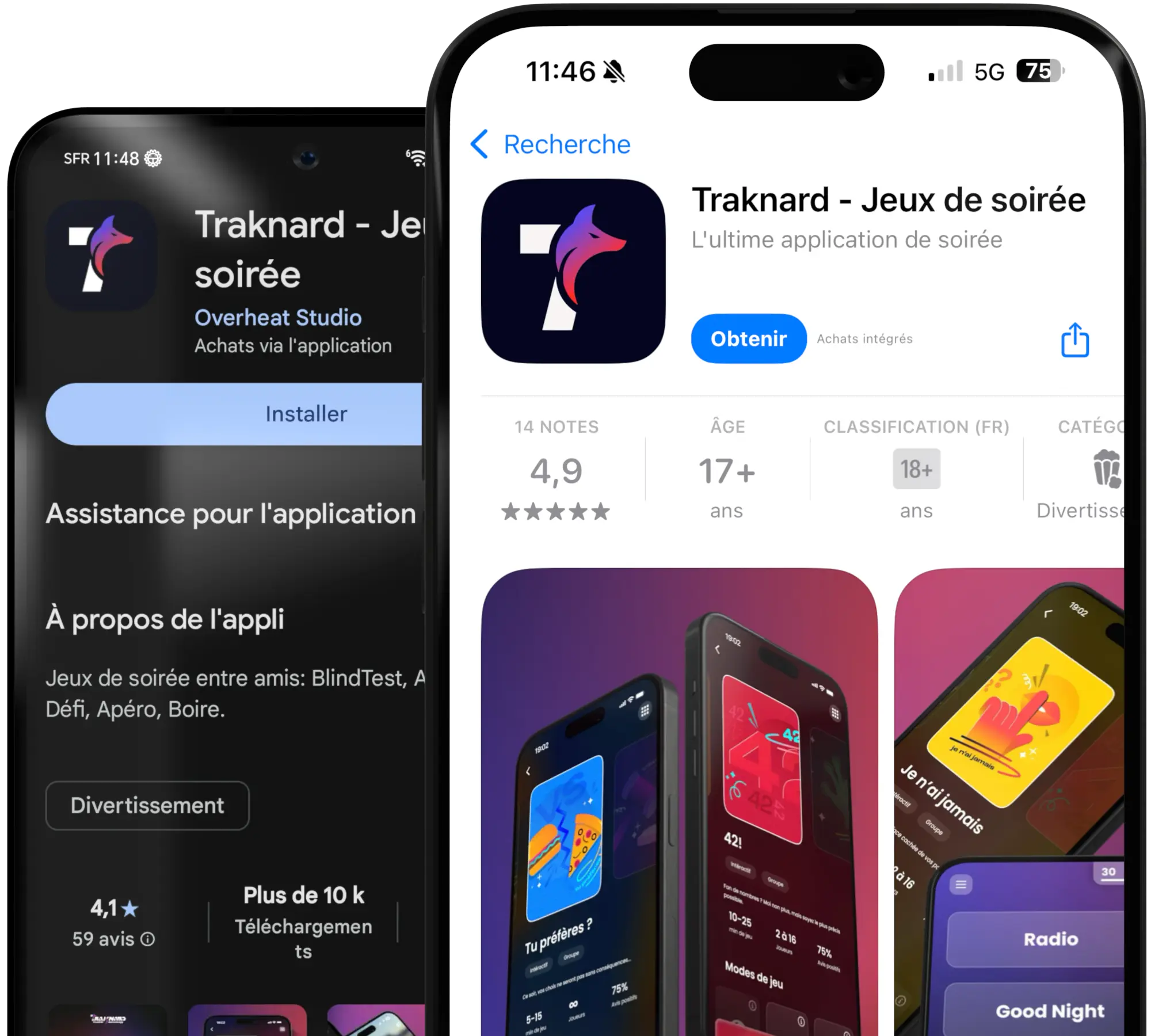
- Materials: None (or the Traknard app for unlimited questions)
- Best time: Right at the start, first few minutes
- Why it works: Questions are light, nobody has to overshare, and the debates that follow ("but how can you prefer cold to heat?!") create instant connection.
- Example question: "Would you rather never eat sweet again or never eat savoury again?" — and you're off for five minutes of chaos.
2. Two Truths, One Lie
Concept: Each player says 3 statements about themselves (2 true, 1 false), and everyone else tries to guess which one's the lie.
- Min. players: 4
- Materials: None
- Best time: After the first game, once the group's loosening up
- Why it works: You learn unexpected stuff about people — and the lie often reveals as much as the truths. It's a game that hits you with "wait, seriously?!" moments on repeat.
- Pro tip: To make the lie believable, pick something plausible but slightly exaggerated. "I've met a celebrity" — true or false? The group debates, and everyone has a laugh.
3. Never Have I Ever
Concept: Each player says "Never have I ever..." followed by an action. Anyone who's done it raises their hand (or takes a sip).
- Min. players: 4
- Materials: Drinks (anything — juice, water, soft drinks, doesn't matter)
- Best time: When the group's warmed up a bit, mid-night
- Why it works: You find out surprising stuff about people without having to ask directly. And the accidental revelations often make the best moments of the night.
- Note: This game works just as well with soft drinks — juice, lemonade, homemade mocktails. The fun's in the revelations, not what's in the glass.
4. Character Portrait
Concept: You ask questions like "If you were an animal, which would you be?" — each player answers and explains why.
- Min. players: 3
- Materials: None
- Best time: Relaxed hangout, integration night, group that doesn't know each other at all
- Why it works: Metaphorical questions let people reveal themselves without risk. "I'd be a cat because I like sleeping and I pretend to be independent" — boom, you already know a lot about this person.
- Question variations: If you were a dish / a film / a season / an emoji / a superpower / a city...
5. Human Bingo
Concept: Each player has to find someone in the group who matches each square on a grid of characteristics ("missed a flight", "speaks a third language", "vegetarian"...).
- Min. players: 6
- Materials: One sheet per player (or just memorise 5 traits)
- Best time: Integration night with a big group, start of the night
- Why it works: Everyone circulates, talks to everyone, and conversations start naturally. It's the only game on this list that physically forces people to mix.
6. Who Am I?
Concept: A player has a name (character, celebrity, animal...) stuck to their forehead — they ask yes/no questions to figure out who they are.
- Min. players: 4
- Materials: Post-its or bits of paper + pen
- Best time: Mid-night, when the group's warmed up
- Why it works: The questions people ask reveal how they think, and the laughs are guaranteed when someone's struggling to figure out "Mickey Mouse" after twenty questions.
7. Question Chain
Concept: The first player asks the next one a question, they answer and ask the person after them a new question — never stopping.
- Min. players: 4
- Materials: None
- Best time: To kick things back into gear after a lull, or early on to get everyone talking
- Why it works: The fast pace stops people overthinking, questions bounce around unpredictably, and you end up learning unexpected stuff about everyone in ten minutes.
8. Speed Dating Express
Concept: Two players have 60 seconds to ask each other as many quick questions as possible. You rotate every minute.
- Min. players: 6
- Materials: A timer (your phone works)
- Best time: Integration night, pre-drinks with people who don't really know each other
- Why it works: The time pressure forces you to cut to the chase. In ten minutes, everyone's talked to everyone — and conversations keep flowing naturally after.
9. Inner Weather
Concept: Each player describes their current mood using weather ("I'm mostly cloudy with some sunny spells" or "clear skies, light breeze"). Others can ask why.
- Min. players: 3
- Materials: None
- Best time: Relaxed hangout, small group, more intimate night
- Why it works: It's gentle, creative, and lets everyone introduce themselves without risk. The weather metaphor takes the pressure off introspection — and the answers are often surprising.
10. One-Word Story
Concept: The group builds a story together by adding one word each, in turn, without stopping.
- Min. players: 4
- Materials: None
- Best time: To revive a sagging night, or late-night to finish on a laugh
- Why it works: Stories always veer off in completely random directions, and attempts to sabotage (throwing in "suddenly" or "unfortunately" at the wrong moment) are hilarious.
The unwritten rules to keep it fun 📋
A solid icebreaker isn't just about picking the right game — it's about running it so nobody feels uncomfortable. Here are the unwritten rules that the best party hosts follow without thinking.
- Start light, build gradually. Never kick off with deep questions in the first minute. "Beach or mountains?" before "what's your biggest regret?" — always. The group needs to feel safe before you go deeper.
- The right to pass is sacred. Everyone should be able to say "I'll pass" without getting booed. A game that makes someone squirm is a failed game. Mention this rule at the start — it kills a lot of potential awkwardness.
- Respect the quiet ones. Some people need to watch for a round or two before jumping in. Don't force them to answer first — let them see how it goes, and they'll join naturally.
- Know when to switch games. A game that goes on too long kills the vibe it created. The moment you notice answers getting shorter and people checking their phones, that's your signal: move on.
- Alcohol or no alcohol, the fun stays the same. All these games work perfectly with soft drinks, mocktails, or sparkling water. If you play "Never Have I Ever" with forfeits instead of sips, it's just as fun — and everyone can join in.
- The host sets the tone. If you're running the game, you go first. Be honest, drop something a bit unexpected about yourself — and the group will follow.
"The best icebreaker is one where you forget you're playing a game — because you're too busy laughing or shocked by what someone just said."
How to chain games together to keep the vibe going all night 🔄
One game is good. A proper progression across the whole night is better. Here's the flow that works, from first arrival to last person standing.
- Phase 1 — Takeoff (0 to 20 min): light game, zero pressure. Start with "Would You Rather?" or "Character Portrait". Goal: get everyone talking once, land the first laughs. No need to wait for everyone to arrive — kick off with 4-5 people.
- Phase 2 — Building momentum (20 to 45 min): slightly more revealing game. Move into "Two Truths, One Lie" or "Question Chain". The group's getting to know each other, people are more comfortable opening up a bit. Laughs start flowing more naturally.
- Phase 3 — The group's hot (45 min onwards): competitive or physical game. "Who Am I?", "One-Word Story" on fast-forward, or "Never Have I Ever" for the revelations. At this point, the group's bonded — games can be more intense without risk of making anyone uncomfortable.
- Phase 4 — Revive if energy dips. It always does at some point. That's when you pull your ace: the Traknard app, Interactions section, to grab a mini-game instantly without thinking. Dozens of group activities available in two taps.
- Phase 5 — End of night. "Inner Weather" or "One-Word Story" on chill mode to finish on a soft note. And if someone's driving — taxi, Uber, or a sober mate — this is the natural moment to remind everyone.
The key is never letting a void open up. The moment you feel the current game running out of steam, move on without hesitation. The group always follows someone who knows where they're going.
Which game to pick based on your group? 🎲
Not all groups are the same. A pre-drinks with 5 mates who barely know each other is different from an integration night with 20 people meeting for the first time. Here's how to pick fast.
By group size
- 3 to 5 people: "Would You Rather?", "Character Portrait", "Inner Weather", "Two Truths, One Lie". Intimate games work better — everyone gets a chance to speak without it taking forever.
- 6 to 10 people: "Never Have I Ever", "Who Am I?", "Question Chain", "Speed Dating Express". Big enough that revelations surprise people, small enough that everyone actually participates.
- 10+ people: "Human Bingo" (the MVP), "Never Have I Ever" with a big group, "One-Word Story". For really big groups, split into sub-groups of 6-8 — usually more effective than trying to get 15 people playing together.
By context
- Integration night (complete strangers): Human Bingo, Character Portrait, Speed Dating Express — games that force natural exchanges without demanding too much intimacy.
- Pre-drinks (semi-acquainted): "Two Truths, One Lie", "Question Chain", "Would You Rather?" — dig a bit deeper, discover unexpected sides of people you thought you knew.
- Relaxed hangout (close mates + 1-2 new people): "Never Have I Ever", "Inner Weather", "One-Word Story" — laid-back vibe, integrate the newcomers without pressure.
And if you want to push things further, check out Dares or Truths and Jury in the Traknard app — perfect for when the group's properly warmed up and the icebreakers have done their job.
Quick reference table — all 10 games at a glance
| Game | Min. players | Materials | Duration | Best for | Intimacy level |
|---|---|---|---|---|---|
| Would You Rather? | 3 | None | 5-10 min | Start of night | Low |
| Two Truths, One Lie | 4 | None | 10-20 min | Pre-drinks, semi-acquainted | Medium |
| Never Have I Ever | 4 | Drinks | 10-20 min | Mid-night | Medium to high |
| Character Portrait | 3 | None | 5-15 min | Integration, relaxed hangout | Low |
| Human Bingo | 6 | Sheets (optional) | 10-15 min | Big group, integration | Low |
| Who Am I? | 4 | Post-its + pen | 15-25 min | Mid / late night | Low |
| Question Chain | 4 | None | 5-10 min | Energy boost | Medium |
| Speed Dating Express | 6 | Timer | 10-20 min | Integration, complete strangers | Low to medium |
| Inner Weather | 3 | None | 5-10 min | Relaxed hangout, small group | Medium |
| One-Word Story | 4 | None | 5-10 min | Energy boost / late night | Low |
FAQ — Your questions about icebreaker games
What's the best icebreaker game for complete strangers?
Answer: "Would You Rather?" and "Two Truths, One Lie" are your MVPs for total strangers. "Would You Rather?" kicks off with zero pressure — questions are light and everyone can answer without feeling exposed. "Two Truths, One Lie" comes next: it creates moments of surprise and curiosity that spark real conversations. Together, these two games cover the first 30 minutes of any night with strangers.
How do you break the ice at an integration night?
Answer: The trick is starting with a short game (5-10 min max), no materials, low pressure, that naturally forces exchanges. Human Bingo is perfect: everyone circulates, talks to everyone, conversations spark on their own. Character Portrait works great too — metaphorical questions let people introduce themselves without risk. The key: don't wait for the vibe to happen on its own. It won't. Launch a game, and it arrives.
What icebreaker games need no materials?
Answer: The good news is most party icebreakers need nothing. "Would You Rather?", "Never Have I Ever", "Who Am I?", "Character Portrait", "One-Word Story", "Question Chain", "Inner Weather" — all launch in 30 seconds with just your voice and a group. Only Human Bingo (a sheet) and "Who Am I?" (a post-it) need minimal stuff — and you can work around that anyway.
How long should an icebreaker game last?
Answer: 5 to 15 minutes per game is the sweet spot. Long enough to build connection and get exchanges flowing, short enough that people don't get bored or start scrolling. Ideal approach: chain 2-3 short games instead of one long one — keeps the pace up and lets you build intensity gradually. The moment answers get shorter and people check their phones, that's your cue to switch.
How do you play Two Truths, One Lie?
Answer: Each player comes up with 3 statements about themselves: 2 true, 1 false. They say them in any order, without signalling which is the lie. Everyone else discusses and votes on which one they think is false. The player then reveals the truth. Pro tip for a believable lie: pick something plausible but slightly surprising. And for the truths: go for unexpected stuff — that's where the "wait, seriously?!" moments happen and the game gets really fun.
Can you play these games without alcohol?
Answer: Absolutely. All these games work perfectly with soft drinks, mocktails, lemonade, or sparkling water. For games with a "drink" penalty like "Never Have I Ever", just swap it for a forfeit or an extra question. The fun's in the revelations and interactions, not what's in the glass. Traknard is a game for everyone — with or without alcohol.
What game works best for a big group (10+ people)?
Answer: Human Bingo is the big-group champion — everyone circulates, talks to everyone, the game basically runs itself. "Never Have I Ever" also kills it with 10+ because collective revelations create strong group moments. For really big groups (15+), splitting into sub-groups of 6-8 is usually more effective: conversations are more intense and everyone actually participates.
How do you revive the vibe if energy drops after icebreakers?
Answer: Switch to something more competitive or dynamic: "Who Am I?" creates chaos, "One-Word Story" on fast-forward generates instant laughs. Running out of ideas? The Traknard app — Interactions or Games section — has dozens of mini-games to grab instantly. You could also try a Blind Test or a round of Dares or Truths to completely shift gears and restart the engine.
Your turn to play 🎉
Breaking the ice at a party isn't rocket science — it's just about launching the first game. Once it's rolling, the group takes over. These 10 games give you everything you need to kick off any night, pre-drinks, or hangout, even with complete strangers, even with zero prep.
For a small group (3-5):
→ Start with "Would You Rather?" or "Character Portrait", then move to "Two Truths, One Lie".
For an integration night or big group:
→ Launch Human Bingo or Speed Dating Express to force exchanges, then shift to "Never Have I Ever" once everyone's relaxed.
To never run out of ideas:
→ Traknard Interactions, Games, and Cards — dozens of games available in two taps, for every group and every vibe.
For drinking games:
→ Soft drinks, mocktails, or juice work just as well. The fun's in the game — not the glass.
The real question isn't "which game do I pick?" It's "why haven't you started the first one yet?" 🔥
Traknard is 18+ only. Drinking games should be played responsibly — or with soft drinks, it's just as fun.